Here is some more detail from your teachers about the topics they will be presenting at the weekend
Roberto Benetti

The geometry of Zhang Zhuang
Dantian Training
The balance points of the body
Taiji circles: Frontal, Horizontal and Vertical planes
Gianfranco Pace 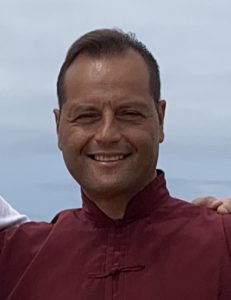
1. Cultivating the intention with the Nei Gong of the archer (to cultivate the intention and the vital force to improve the health state and the martial qualities).
2. ‘A body that knows to listen’ – a work on pushing hands
Nini Melvin
Intro to Seasonal Cycles – Meridian Embodiment Qigong
Embodying nature’s rhythms and cycles is a healing path, personally and planetarily. Energy flows through pathways called meridians, and are made up of the same qualities as nature. The meridians express the elements: water, wood, fire, earth and metal/minerals, from Asian Medicine theory, and nature. We are each a unique recipe. Season by season, each elemental phase connects us to the basic ingredients and rhythms of all of life.
Experience how these qualities of nature move through your twelve meridian pathways.
Let the Qi Move You
We often move the body to move the Qi, however, it is possible to use the breath to let the Qi move you! The transitions between the inhale and exhale, exhale and inhale guide us to cultivate the Qi movements from more than the mind.
We will use simple HUMANATURE qigong forms to experience the effortlessness of initiating movement by following the breath.
Energy Field Awareness – Integration of Personal and Universal Energies
What is the relationship between Qi and space? This practice brings consciousness to how we exchange Qi between our inner world and outer world. We will develop a new understanding of Peng using heart protector and triple heater meridians. Awareness about how we take up space enhances our Taiji and Qigong practice.
Intro to Chinese Body Clock Qigong: Daily Meridian Rhythms
Our Body is One Long, Flowing Meridian (Energy Pathway), the ebb and flow of which creates our own inner clock. All of nature’s elements are interconnected and interdependent, following the universal yin/yang rhythms of rising and descending. Our rhythms and planet earth’s are one. This Chinese Body Clock Qigong form has twelve basic movements, supporting the phases of night and day, flowing from meridian to meridian, element to element, balancing your internal clock.
Margherita Padalino 
1. Cultivating our inner energy with simple but deep Qi Gong exercises
2. Having fun with simple martial techniques for self defence, using Taijiquan principles
Judith van Drooge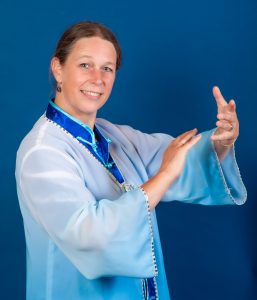
- Chi Kung Fusion
- Grounding
- Getting into the flow
- Connecting Power
Zeng Xiang Bo 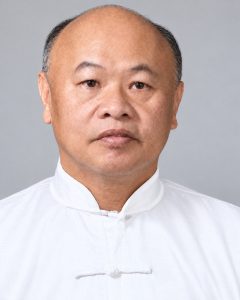
Taiji Circle: Yin-Yang : Infinite Change
Build the foundations of Push Hands through simple partner exercises. Explore weight shifting, vertical and horizontal circles, and hand-switching to develop balance, fluid movement, and the ability to stay connected while changing direction.
Cloud Hands: Yield & Redirect
Discover the martial applications of “Cloud Hands” and “Play the Lute”through partner practice. Learn to receive and redirect an attack, control movement and positioning, and transition smoothly between defence and response.
Fair Lady Works the Shuttles: Turn & Transform
Discover how “Fair Lady Works the Shuttles” can be developed into practical partner skills. Through Roll Back and Press, participants will work with incoming force, change angles, and respond with coordinated whole-body movement.
Snake Creeps Down: Root, Sink & Dissolve
Explore the martial principles of attack, neutralization, and adaptationthrough partner practice. Use Cai Shou (Pulling) and Raise Hands to create and respond to pressure, then apply “Snake Creeps Down” to evade and neutralize an incoming attack while adapting to the changing situation.
Severin Berz 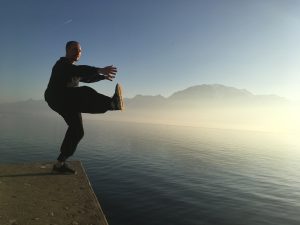
- The Fasciae: Nature’s Power Redirector
- A Floating Pelvis: A Powerful and Moveable Proxy of the Ground
- Kwa and shoulders as an elastic frame
- Verticality: a play between gravity and Vitality
Bob Lowey

Saturday:
Morning – 13 Postures Solo
Afternoon – 13 Postures Partner
Sunday:
Morning – 5 Animals Northern Style
Afternoon – 5 Animals Complete
Gerrit Snellenburg 
How to make the bowls sing
Eline Kieft
-
Oiling the Joints (Saturday and Sunday morning!)
Bring suppleness back to your body with fluid, circular Qi Gong movements designed to lubricate joints and nourish connective tissue. This session supports mobility, relieves stiffness and improve circulation. This helps energy flow smoothly through the whole body.
-
Archetypal Qi Gong (Saturday afternoon)
Explore different qualities of yourself through movement. What happens when you embody the Warrior, the Lover, the Healer or the Mystic? Combining Qi Gong with archetypal imagination, this practice uses posture, movement, breath and attention to awaken different inner resources and discover which ones you need more of.
-
Pearl of Consciousness (Sunday afternoon)
Cultivate a luminous awareness at the core of your being with these subtle Qi Gong energy techniques. You’ll learn to strengthen your energetic field and circulate energy through the body, enhancing vitality, clarity, and inner radiance.
Sergio Uzzo & Simona Longeri

The Five Elements of Xing Yi Quan – Cheng Ming School
The Five Elements are the heart and foundation of the Xing Yi Quan system taught in the Cheng Ming School. These are the first five core techniques that every student learns, providing the essential principles upon which all other aspects of Xing Yi are built. By practicing these movements, students develop structure, coordination, power generation, intention, and the connection between mind and body that defines this internal martial art.
Each element is expressed through a specific fist technique: Pi Quan (Metal), Zuan Quan (Water), Beng Quan (Wood), Pao Quan (Fire), and Heng Quan (Earth). More than simple punches, these movements embody the unique qualities and energies of their respective elements, teaching practitioners how to adapt, transform, and express power efficiently in both martial application and personal development.
This lesson is suitable for everyone, from complete beginners to experienced practitioners. Beginners can focus on learning the fundamental mechanics and body alignment, while advanced students can refine internal power, intent, timing, and deeper martial applications. For this reason, the study of the Five Elements remains a lifelong practice: simple enough for anyone to begin, yet profound enough to continue revealing new insights at every stage of the journey.
Copyright 2026 Tai Chi Caledonia | Privacy Policy