From Monday to Thursday you can train for two and a half hours each morning and afternoon. Each day you can work on 2 separate disciplines (one from category A and one from category B) for 2.5 hours each, totalling 5 hours per day. This allows for 10 hours of intensive training in each of your chosen disciplines over 4 days. Please select one from each category.
A1 – Roberto Benetti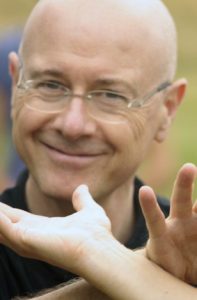
PRINCIPLES OF INTERNAL WORK FOR HEALTH AND MARTIAL ARTS
In martial arts, there are principles that underlie the practice of internal work. In TJQ they are called the Classics of TJQ and concern body posture, perceptions and mental attitude.
We will investigate some especially related to the structure in body movement, how to apply in Tuishou, and in the execution of the main figures of TJQ.
Accessible to all
A2 – Frederic Plewniak 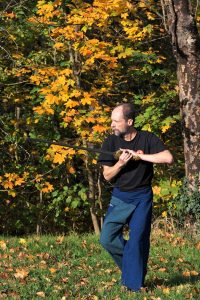
SPIRALS AND SWORD MANIPULATION
This workshop invites you to discover and explore the role of spirals—twisting forces and spiralling movements—in the practice of Taijijian, from foundational basics to controlled and gentle partner work.
We will highlight the importance of spirals for:
i) sword grip and guard postures;
ii) jiben jianfa (basic techniques);
iii) sensitivity to the partner (sensing the blade);
iv) fluidity in movements and technique sequences;
v) parrying, sword control, footwork and positioning in partner drills and martial applications.
Accessible to all
A3 – Matthew Case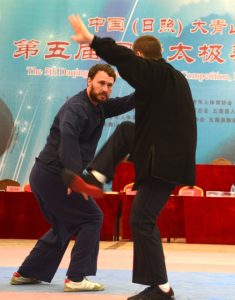
The SIX HARMONIES THEORY & YIN-YANG SILK-TWINING TRAINING (Yin-Yang Chansigong 阴阳缠丝功)
While silk-twining (or silk-reeling) is most commonly associated with Chen-style Taiji, this Yang-Style version is applicable to any style of Taiji or internal martial art. Choreographically, the exercises are relatively simple, however, they allow for a deep-level study of principles, such as: opening and closing of the joints, cross-body fascia connections, postural alignment, more fluidity through the phases of movement, and coordination of the body via the waist and intent (Yi 意). These exercises incorporate the Six Harmonies theory and can be a great aid in improving your solo form and push-hands.
In the four days we will be focused on three general themes:
1. The Six Harmonies theory (liu he– 六合). This is a very traditional set of principles referenced in the Taiji Classics. It is composed of the three external harmonies – which states that the shoulders, elbows and hands must be harmonized to the hips, knees and feet, and the three internal harmonies – which states that the heart-mind (Xin 心) must harmonize with the intent (Yi 意), the intent must harmonize with the Qi (氣), and the Qi must harmonize with the physical force.
2. The four basic exercises of Yin-Yang Silk-Twining Training and their technical aspects.
3. Finally, we will be exploring the above in the context of two person practices such as sensing hands and push-hands exercises.
Expect to work hard and explore deeply; this training can be transformative and enriching. While some taiji or internal art experience is ideal, it is suitable for all levels and any stylistic background.
Accessible to all, although some previous experience would be beneficial
A4 – Yanira Rodriguez 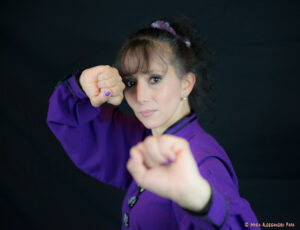
CULTIVATING VITALITY AND HARMONISING LIFE ENERGY
Integrative health fosters overall well-being by placing you at the center of your care journey, ultimately enhancing your quality of life. This approach, supported by modern frameworks from institutions like the Andrew Weil Center for Integrative Medicine, aligns with the ancient, holistic worldview of Traditional Chinese Medicine (TCM).
Rooted in the timeless wisdom of classical texts like the 黄帝内经 -Huángdì Nèijīng-, this seminar series masterfully blends these ancient practices with contemporary wellness insights to enhance your vitality and harmonize your life energy, or Qi.
This program is designed to guide you in exploring the essential pillars of integrative health. You will engage with practices such as Tai Chi and Chi Kung—whose principles are detailed in the 太极拳经 -Tàijí Quán Jīng-complemented by mindfulness, brain gymnastics, and key TCM modalities including seasonal acupressure, diet therapy, and herbal medicine.
Five-Element Taiji-Qigong Practice: Cultivating Vitality and Harmonising Life Energy 太极气功五行养生调和功 (Tàijí Qìgōng Wǔxíng Yǎngshēng Tiáohé Gōng)
This practice reveals the profound power of Tai Chi and Qigong as essential pillars of holistic health, with roots deeply anchored in the timeless wisdom of Classical Chinese texts. Our journey is guided by the foundational theories of the 黄帝内经 -Huángdì Nèijīng-, which establishes the framework of the Five Elements, their corresponding organs, and the importance of harmonizing with seasonal cycles.
The philosophical core of the practice is inspired by the 道德经-Dàodé Jīng-, which describes the generation of all things from the Dao into the dynamic interplay of Yin and Yang. This theory is brought to life through the movement principles of the 太极拳经 -Tàijí Quán Jīng-, where we learn to “move Qi like coiling a nine-curved pearl” (运气如九曲珠), ensuring our energy flows smoothly and without obstruction.
Throughout the week, we will learn how this Five-Element routine—elegantly divided into five sections—seamlessly combines these two disciplines. We will explore how each posture is designed to harmonize the Qi of specific organ networks, an insight illuminated by the work of modern masters like Dr. Yang, Jwing-Ming and Jou Tsung Hwa, whose analysis provides a tangible, physical justification for the elemental assignments within the form.
Our exploration will be holistic, integrating seasonal acupressure, dietary wisdom, and herbal therapy, all reflecting the ancient goal of Daoist Internal Alchemy -内丹术, Nèidān Shù- to cultivate and refine our vital energy from within. Through this synthesis of classical doctrine and practical application, this practice offers a complete path to strengthen the body, calm the mind, and prevent illness by consciously harmonizing your life energy with the natural world.
Accessible to all
B1 – Dee Swift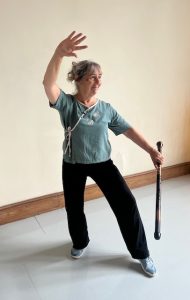
INTRODUCTION TO THE TAI CHI FLUTE
Training with the bamboo flute is an ideal way to extend the principles of open-handed Tai Chi into weapon work. Working with the flute develops smoothness and flow for those already practising with blades, and through its own nature the flute connects to the breath.
On this course you will learn techniques and drills that fit together into a short sequence to take away. The sequence will be available on video, but there will be ample time to cover the movements in the sessions. Mindful partnerwork and applications will be included, and a suggestion about how the same skills may be adapted for other weapons. (We will not be learning to play the flute. Practice weapons will be provided.)
Accessible to all
B2 – Nini Melvin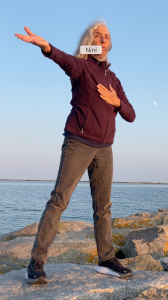
CHINESE BODY CLOCK QIGONG: MERIDIANS DAILY BIORHYTHMS
Our Body is One Long, Flowing Meridian (Energy Path) – the ebb and flow of which creates our own inner clock. All of nature’s elements are interconnected and interdependent, following the universal yin/yang rhythms of rising and descending. Our biorhythms and planet earth’s are one.
This Chinese Body Clock Qigong form has twelve basic movements, supporting the phases of night and day, flowing from meridian to meridian, element to element, balancing your internal clock. With over four decades of practicing and teaching shiatsu, dance and qigong, I have created this healing qigong form that may be practiced in as little as five minutes or longer as desired. The form may be performed seated or standing, with full body movements and pressure point stimulation. I will share new ways of touching and listening to these pressure points and cultivating the free flow of energy throughout the day.
Many of life’s experiences can interrupt the harmonious workings of our inner clock and create imbalance and illness. Each meridian has two peak hours to move through its energy pathway, and two hours when it is at its weakest. Tuning into our inner clock can give us insight into our own biorhythms, tendencies, gifts and challenges throughout the day.
Meridians circulate in elemental pairs (e.g. the metal pair of lung and large intestine), meeting in the hands and feet, unifying yin/yang within each element. Embodying and stimulating these points through Self-Shiatsu give us insight into the locations and functions of each meridian.
The meridians also circulate and connect from one element to the next, meeting in the face andtorso. These are places the flow of energy tends to get disconnected or blocked, especially with accidents, injuries or traumas. We will use self-shiatsu to treat the six powerful pressure point combinations. These can be done on ourselves, taught to others, and incorporated into the qigong flow.
When we pay attention to the patterns of our energy throughout the day, we can find where this one long meridian has been “broken”, blocked or disconnected. Understanding how we struggle during certain hours helps us to locate these blockages and recreate balance by connecting the beginning and ending pressure points of these meridians. Allowing each meridian to fulfill itsfunction, can help us heal from trauma, illness, injuries and the stresses of life.
Accessible to all
B3 – Judith van Drooge
BODY MECHANICS 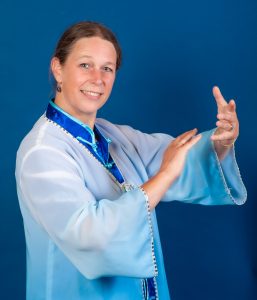
William C. C. Chen teaching methods, body mechanics. What’s good for the brain is good for the body. What’s good for the body is good for the brain.
How do body and mind connect like Yin and Yang? Exploring with focus. Using your mindset. Where your attention goes, energy flows. Yin and Yang keep each other in balance. How to play with this balance.
Elements including moving from the centre and feeling the connection from the centre to the hands and driving the movements from the legs through the body and out the body. Tilting the body forward is a preparation to generate power. Power used for jumping, boxing or in fact the power to do anything, the effortless doing power.
Every movement needs grounding. Without grounding there is no support for a movement and the movement will have lack of intention, no shape or direction. Using your grounding will help to support the force to be able to create expansion and extension from the Dan Tien and giving direction to your movement. When you’re not connected with the earth, you’re on your own.
How to help each other practice by being a Tai Chi Dummy. Sometimes we need a little resistance to understand and become aware of what we are doing. Helping yourself and the other to find and feel the centre. Once found, you can use it or even hide it. Making contact to somebody without losing your centre/yourself. Very useful to integrate in your own Tai Chi and/or Chi Kung practice.
To use your techniques in contact with other people. Not only with pushing hands but also in daily life, we meet so many people. Pushing hands is like a non-verbal conversation. What message do you get and what do you want to say. Being true and loyal to yourself like to others and treat others like you want to be treated.
Besides applications, Pushing Hands, partner exercises we will use easy to follow Chi Kung movements to explain the content.
Energy flow.
Connecting power.
With feeling heart.
Chi Kung fusion.
Healing body.
Getting into the flow.
Accessible to all
B4 – Severin Berz
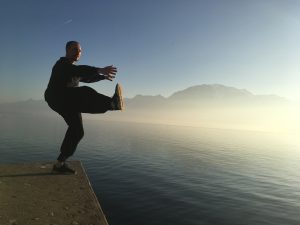
Floating Pelvis: A Powerful and Moveable Proxy of the Ground
Learn to use your pelvis as a dynamic base to improve stability, power, and fluidity. This workshop teaches you how to avoid common pitfalls like straining your knees and back in daily life. You’ll also discover how this skill can transform your Taiji practice, making your Tuishou soft and powerful.
The Fascia: Nature’s Power Redirector
We’ll also explore how your fascia, or connective tissue, acts as a power redirector. In this workshop, you’ll learn how triggering the fascia before the muscles can change power distribution in the body, leading to more fluid and efficient movement. Understanding this concept can help you move with less effort and also helps in injury prevention. By honing your awareness of this intricate system, you can enhance your daily life and your practice of Taiji and Tuishou.
Accessible to all
Copyright 2026 Tai Chi Caledonia | Privacy Policy